


BIOSTISTICS, BIOINFORMATICS AND ARTIFICIAL INTELLIGENCE
The Biostatistics, Bioinformatics, and Artificial Intelligence (BBAI) Unit of MODAS (Multi-Omics Design and Analysis Studio) serves as a core methodological and computational hub, supporting translational and omics-driven research across biomedical sciences. The unit integrates advanced statistical modeling, computational biology, and cutting-edge AI/ML approaches to transform raw data into actionable knowledge. With expertise spanning experimental design, high-dimensional data analysis, and predictive modeling, the BBAI Unit ensures that projects are equipped with rigorous methodologies, reproducible workflows, and interpretable results that align with international standards.
Strategic Role: The BBAI Unit not only provides methodological support but also acts as a collaborative partner in grant applications, industrial partnerships, and translational research programs. By bridging statistics, bioinformatics, and AI, the unit enhances the capacity of MODAS to deliver innovative, data-driven solutions in personalized medicine, clinical decision support, and next-generation therapeutic development.
Our Services
Retrospective and Prospective Study Design
Multi-Omics Data Integration and Analysis (Genomics, Proteomics, Metabolomics)
Application of Artificial Intelligence (AI) in omics research
Concentration Areas:
The BBAI Unit at MODAS serves as the methodological and computational backbone for multi-omics, clinical, and translational research. By combining statistical rigor, computational biology, and artificial intelligence, the unit transforms complex datasets into reliable, actionable insights while ensuring research quality and reproducibility.
Biostatistics
- Study design consultation (clinical trials, observational studies, experimental setups)
- Sample size estimation, power analysis, and adaptive trial methodologies
- Statistical modeling (linear, non-linear, mixed models, survival analysis, Bayesian inference)
- Data quality control, missing data handling, and multivariate analysis
- Advanced visualization and interpretation for publications and regulatory submissions
Bioinformatics
- Omics data processing (genomics, transcriptomics, proteomics, metabolomics, epigenomics)
- Integrative multi-omics pipeline development and systems biology approaches
- Functional annotation, pathway enrichment, and network analyses
- Combinatorial biomarker discovery and validation using large-scale datasets
- Data management, curation, and reproducible workflow implementation
Artificial Intelligence
- Machine learning and deep learning for pattern recognition and prediction
- Development of diagnostic and prognostic models for complex diseases
- Natural language processing (NLP) for literature mining, electronic health records, and biomedical text analysis
- AI-assisted image analysis (microscopy, radiology, pathology, segmentation and classification)
- Generative AI applications for hypothesis generation, drug discovery, and personalized medicine
Strategic Role
The BBAI Unit not only provides methodological support but also acts as a collaborative partner in grant applications, industrial partnerships, and translational research programs. By bridging statistics, bioinformatics, and AI, the unit enhances the capacity of MODAS to deliver innovative, data-driven solutions in personalized medicine, clinical decision support, and next-generation therapeutic development.
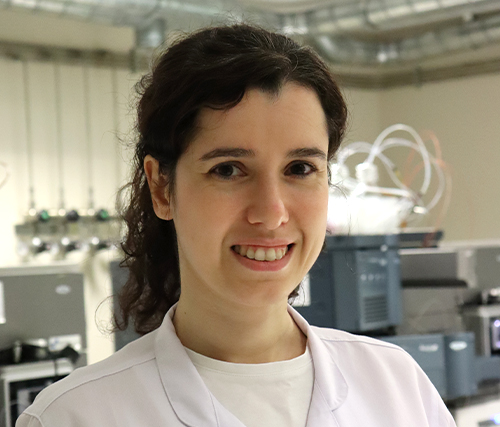
Dr. Hayriye Ecem Yelkenci
Comprehensive workflow experience in bottom-up shotgun proteomics, involving sample preparation, UPLC-QTOF-based mass spectrometry, bioinformatics and biostatistical analysis.
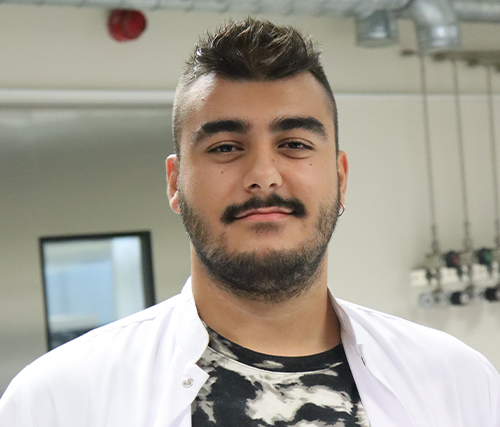
Bahadır Açıktepe (MSc)
Expertise has been developed in bioinformatics, biostatistics, and statistical analysis using programming tools. Experience has been gained in proteomic sample preparation, ICP-MS operations, and method validation for biological data interpretation.
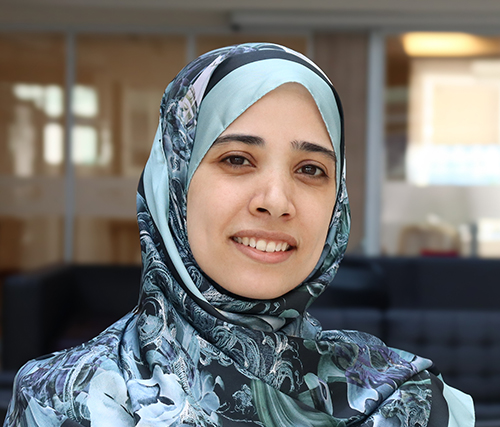
Dr. Sarah Barakat
Multiomics data analysis, with particular expertise in proteomics and integrated approaches to investigate cellular mechanisms and molecular interactions.
Working Area & Solutions
- Study design guidance for clinical trials, observational studies, and omics-driven projects
- Sample size and power calculations for efficient resource planning
- Strategic input for grant applications, regulatory submissions, and industrial collaborations
- Tailored data analysis plans aligned with research goals and international standards
- Biostatistics: advanced modeling (linear, non-linear, mixed effects, survival, Bayesian), missing data strategies, multivariate analysis, adaptive designs
- Bioinformatics: processing and integration of multi-omics datasets (genomics, transcriptomics, proteomics, metabolomics, epigenomics), biomarker discovery, systems biology approaches
- Artificial Intelligence: machine and deep learning pipelines, diagnostic/prognostic model development, AI-based imaging analysis (pathology, radiology, microscopy), and natural language processing for biomedical data mining
- Data visualization and interactive dashboards for clear interpretation and dissemination
- Alignment with national and international research ethics standards (e.g., GDPR, HIPAA, ICH-GCP)
- Reproducible workflows with transparent documentation
- Data security and compliance protocols for sensitive biomedical and clinical datasets
- Ethical AI practices, ensuring fairness, interpretability, and responsible use of algorithms
- Translational medicine and precision health
- Biomarker discovery and validation
- Multi-omics integration and systems-level analysis
- Clinical trial design and adaptive methodologies
- Explainable AI-driven decision support in healthcare and personalized medicine
Our Services:
Comprehensive Services: We offer a wide range of services, including untargeted proteomics and metabolomics analysis, targeted quantitative analysis. Our customized workflows are designed to fit your specific research needs.
Each research project is unique: Tailored consultation for experimental design to optimize your research.
- Expert preparation of diverse samples for precise analysis (cells, body fluids, tissues, etc.)
- Comprehensive untargeted proteomics and metabolomics analysis for in-depth insights
- Advanced data analysis and statistical evaluation to ensure robust findings
- Detailed consultation and clear interpretation of results to help you make informed decisions
- High-precision ICP-MS analysis for trace elements, heavy metals, and minerals in biological samples
- Advanced HPLC systems for fractionation and chemical analysis of complex mixtures
- MALDI analysis for high-resolution biomolecular identification
FEATURES
Burası diğer sayfalar
Feature List
Add multiple feature items, set different icons or images for each feature and also give custom links if needed.
Key Features
Choose your style from three different layouts and two unique icon background shapes.
Connector Line
Show a connector line between each icon, changes its color and style to fit your unique design.
Connector Line
Show a connector line between each icon, changes its color and style to fit your unique design.
Connector Line
Show a connector line between each icon, changes its color and style to fit your unique design.
Connector Line
Show a connector line between each icon, changes its color and style to fit your unique design.
Connector Line
Show a connector line between each icon, changes its color and style to fit your unique design.

Biostatistics and Bioinformatics UNITS
The Biostatistics Unit serves as a cornerstone for MODAS, ensuring the scientific rigor and reliability of research outcomes.

Proteomi̇cs Metabelomi̇cs UNITS
Our laboratory is equipped with cutting-edge mass spectrometry technology, delivering advanced solutions in the fields of proteomics and metabolomics.

Genomics Metagenomics UNITS
Next generation sequencing technology, which allows for a holistic understanding of the living structure with big data, is an important part of Multi-OMICS.