



Optogenetics
Optogenetics is a cutting-edge technique that uses light to control neurons that have been genetically modified to express light-sensitive ion channels. This tool enables precise temporal and spatial manipulation of neural circuits, allowing researchers to study their functions in vivo.
Chemogenetics
Chemogenetics involves the use of engineered receptors activated by designer drugs to modulate specific neuronal populations. This approach provides a versatile platform for investigating neural circuit dynamics and their behavioral outcomes in a controlled manner.
Patch Clamps
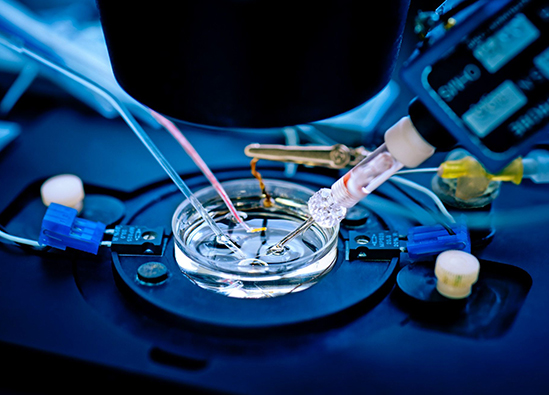
Patch clamp electrophysiology is a gold-standard method for measuring ionic currents in individual cells or small cell populations. It enables high-resolution analysis of the electrical properties of neurons, contributing to a deeper understanding of their physiology.
Fiber Photometry
Fiber photometry is a real-time imaging tool that monitors calcium dynamics or neurotransmitter release in neuronal populations. It provides insights into the activity of specific neural circuits during behavioral tasks.
Extracellular Electrophysiology
Extracellular electrophysiology records the electrical activity of neurons in vivo or in vitro. This technique is critical for understanding network-level interactions and the role of specific neuronal populations in physiological and pathological processes.
XPCT (X-ray Phase-Contrast Tomography)
XPCT is an advanced imaging technique that visualizes soft tissues with high resolution and contrast. This tool is particularly useful for studying structural changes in neural and other biological tissues.
Behavioral Tests
Behavioral tests are experimental protocols designed to evaluate various cognitive, emotional, and motor functions in animal models. These tests provide critical data on how neural manipulations impact behavior.
Animal Husbandry
Animal husbandry involves the care, breeding, and management of laboratory animals in a controlled and ethical environment to ensure reliable experimental outcomes. This includes the generation and maintenance of advanced genetic models such as 5xFAD, AgRP-Cre, and double transgenic lines. These specialized models are crucial for studying complex biological processes like neurodegeneration, metabolism, and neural circuit dynamics.