

Cover Article: Precision Chemistry brings cellular gas signaling under experimental control
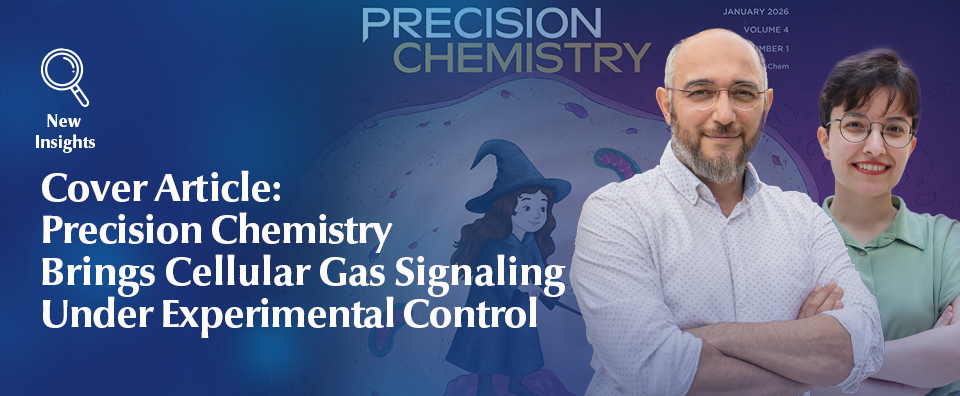
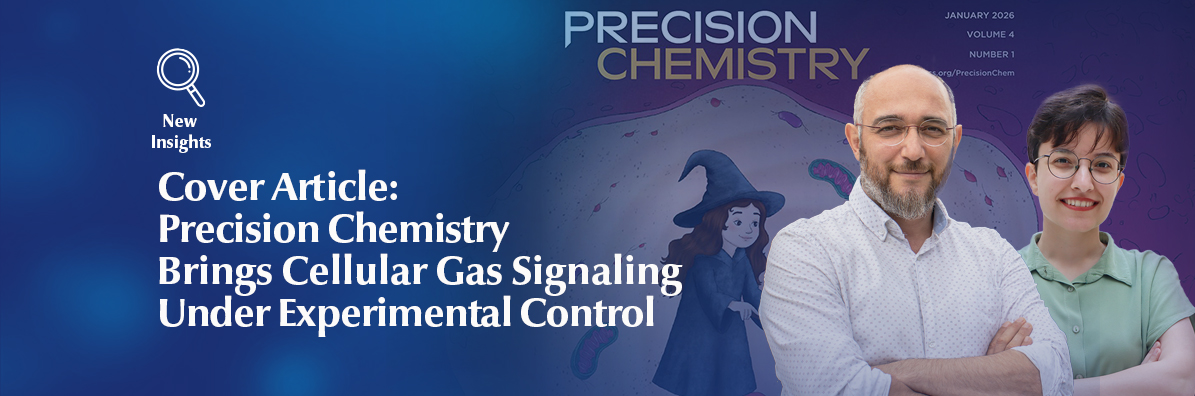
A study led by the group of Emrah Eroğlu at Istanbul Medipol University (Director of SABITA) Health Sciences and Technologies Research Institute has been selected as the cover article of Precision Chemistry (January 2026). The research introduces a new strategy to experimentally control hydrogen sulfide (H₂S)—a gaseous signaling molecule with wide-ranging roles in human biology.
Authored by the leading author Asal Ghaffari Zaki and collaborators at SABITA, the study presents H2SWITCH, a chemogenetic system designed to regulate H₂S signaling in living cells with spatial and temporal precision.
Hydrogen sulfide plays a central role in mitochondrial metabolism, cardiovascular regulation, and cellular stress responses. Yet despite its importance, its biological functions have remained difficult to define, as conventional experimental tools often lack specificity and obscure cause–effect relationships. H2SWITCH shifts H₂S research from correlation-based observation to causally testable biology, allowing researchers to determine precisely when and where gas signaling actively shapes cellular behavior.
Hydrogen sulfide is not merely a biochemical intermediate; it directly influences how cells generate energy, maintain redox balance, and respond to stress. These mechanisms lie at the core of major global health challenges, including cardiovascular disease, neurodegenerative disorders, metabolic syndromes, and cancer. By enabling precise control over when and where H₂S is produced, the study allows researchers to more clearly dissect mitochondria- and redox-driven pathways that contribute to these conditions.
Distinguishing whether a molecule actively drives disease progression or simply accompanies it is critical for building reliable disease models and identifying valid therapeutic targets. Greater mechanistic clarity strengthens preclinical research, improves the predictive value of experimental systems, and ultimately supports more rational treatment strategies.
The implications extend beyond academia. In biotechnology and pharmaceutical research—where reproducibility, standardization, and target validation are essential—controllable systems such as H2SWITCH reduce experimental ambiguity and enhance the robustness of drug development pipelines.
“Our aim was not simply to introduce a new tool,” says Eroğlu. “We wanted to enable clearer questions—and therefore clearer answers—about how gas signaling operates in living systems.”
Its selection as a cover article highlights a broader shift toward precision chemistry approaches, exemplified by interdisciplinary research environments such as SABITA, where chemistry, biology, and technology converge to address the complexity of living systems.
Explore the full study in Precision Chemistry : https://pubs.acs.org/doi/10.1021/prechem.5c00189