

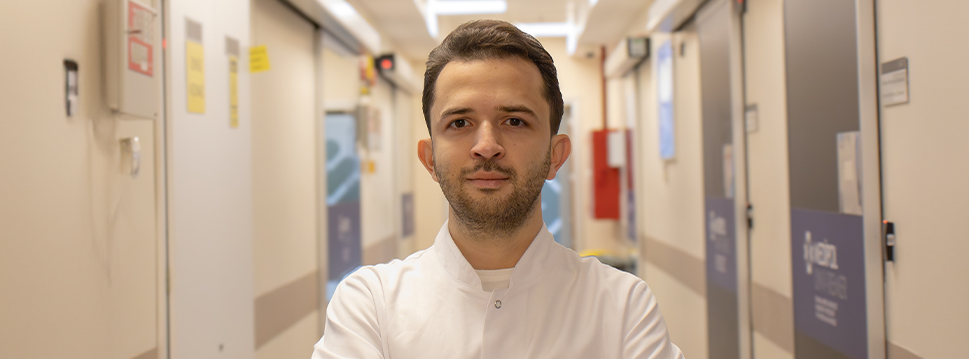
Burak Bilgin
[email protected]Burak Bilgin received his B.Sc. degree in Molecular Biotechnology from the Turkish-German University and is currently pursuing an M.Sc. in Medical Physiology at Istanbul Medipol University. His research focuses on molecular genetics, neurophysiology, and translational medicine, with particular expertise in genetic disease modeling, pharmacogenetics, and rare disease research. He has hands-on experience with molecular and cellular techniques, including DNA isolation, Real-Time PCR, lentiviral transduction, and flow cytometry, as well as omics-based data analysis and next-generation sequencing. At his B.Sc years, he contributed to the establishment of an in vitro neural cell model for Wu-type X-linked intellectual disability and participated in studies investigating genetic polymorphisms associated with Alzheimer’s disease. In the Medical Physiology Laboratory (Q-Lab), he has gained experience in stereotaxic injections, brain slicing with vibratom, the Cre-loxP recombination system, and animal behavior experiments. He continues to work on projects in the field of nutrition and metabolism, with a particular focus on leptin-related AgRP and POMC neuronal mechanisms.
Selected Publications;
In Vitro Generation and Characterization of The Wu Syndrome Model That Causes Mental Retardation in Neural Cell Lines
In Vitro Generation and Characterization of The Wu Syndrome Model That Causes Mental Retardation in Neural Cell Lines /
Karaman, S. S., Sevik, T., Akdemir, S., Bilgin, B., Karadeli, E., Yalcin, D., Baran, B., Gelsin, B., Budaklar, B., Sert, B., Gulden, G., & Tastan, C. (2024). In vitro generation and characterization of the WU syndrome model that causes mental retardation in neural cell lines. bioRxiv (Cold Spring Harbor Laboratory). https://doi.org/10.1101/2024.07.01.601494