

InFocus / New Horizons in In Vitro Modeling


SABITA’s InFocus series brings together two scientific events under the shared theme “New Horizons in In Vitro Modeling.
📅 February 27, 14:30 – Assoc. Prof. Ken-ichiro Kamei
📅 March 27, 14:30 – Assist. Prof. Vijayavenkataraman Sanjairaj
Together, these sessions explore cutting-edge strategies for reconstructing living systems in the laboratory and advancing clinically relevant tissue engineering approaches. The series reflects InFocus’s commitment to fostering interdisciplinary dialogue and accelerating translational research.
February 27 | Reverse Bioengineering to Recreate Multicellular Animals In Vitro
Assoc. Prof. Ken-ichiro Kamei (New York University Abu Dhabi)
This session will introduce the concept of Reverse Bioengineering, an approach aimed at reconstructing the complex architecture and functions of multicellular organisms in vitro. Central to this work are Body-on-a-Chip (BoC) platforms that integrate microfluidic technologies with stem cell biology to simulate interconnected tissue and organ systems under physiologically relevant conditions. The talk will present applications including gut–liver co-culture models for studying non-alcoholic fatty liver disease (NAFLD) and stem cell–derived human blastoids for investigating early embryogenesis. By capturing dynamic tissue–tissue interactions, these models provide powerful alternatives to animal experimentation and open new avenues for disease modeling, drug discovery, and regenerative medicine.
March 27 | 3D (Bio)Printing of Clinically-Relevant Soft Tissue Constructs
Assist. Prof. Vijayavenkataraman Sanjairaj (New York University Abu Dhabi)
The second session focuses on the fabrication of biomimetic, clinically relevant soft tissues using advanced 3D bioprinting technologies. Emphasis will be placed on Digital Light Processing (DLP)–based bioprinting and its advantages over conventional extrusion methods. Recent laboratory work on DLP bioprinting of corneal stroma equivalents and knee meniscal tissue will be highlighted, including the formulation of tissue-specific photo-crosslinkable bioinks and the mechanical, material, and biological characterization of printed constructs. These efforts aim to address the global shortage of transplantable tissues and organs, contributing to next-generation regenerative therapies and functional tissue restoration strategies.
Location: Istanbul Medipol University, Kavacık North Campus, C Block, First Floor – Senate Room.
https://maps.app.goo.gl/4heDR2rqmsrKnjHu8
📌 Please note: For participants outside SABITA, filling out the registration form is required.
To Registration: InFocus Registration Form
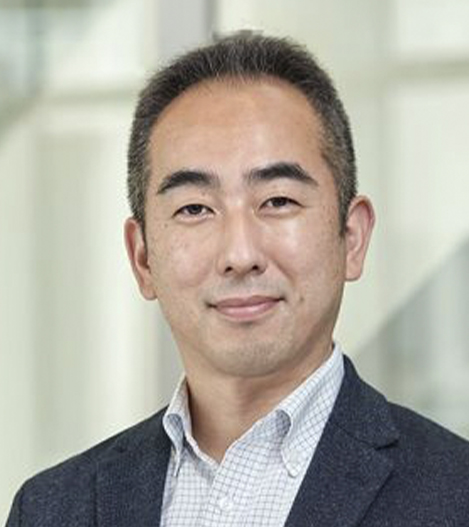
Ken-ichiro Kamei is a stem cell engineer and an associate professor jointly appointed in the Biology and Bioengineering programs within the Divisions of Science and Engineering at New York University Abu Dhabi. He is also an affiliated associate professor at the Tandon School of Engineering, New York University, a visiting associate professor at the Institute of Integrated Cell-Material Sciences (iCeMS), Kyoto University, and a visiting professor in the Department of Pharmaceutics, Wuya College of Innovation, Shenyang Pharmaceutical University. He earned his BA (1998) and MS (2000) before obtaining his PhD from the Tokyo Institute of Technology in 2003. His career includes a postdoctoral fellowship at the Molecular Biology Institute at the University of California, Los Angeles (UCLA), a staff research associate position at the California NanoSystems Institute at UCLA, and roles as an assistant professor and later an associate professor at iCeMS, Kyoto University.
His research centers on developing a miniature, comprehensive device called “Body on a Chip,” designed to mimic the physiological and pathological conditions of living systems in vitro. His current research focuses on advancing regenerative medicine and drug discovery for humans and endangered animals, with the ultimate goal of enhancing global healthcare.
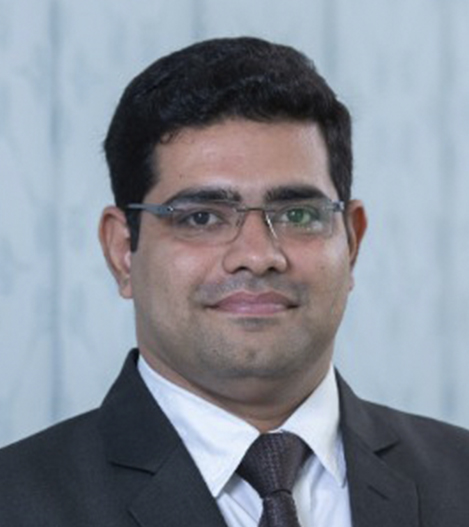
Vijayavenkataraman Sanjairaj is a tenure-track Assistant Professor of Mechanical Engineering and Bioengineering at New York University Abu Dhabi. Prior to joining NYUAD, Vijay was Research Fellow at the National University of Singapore. He holds a Ph.D. in Mechanical Engineering from the National University of Singapore and B.Eng. from the College of Engineering Guindy, India.
His research focus includes 3D printing and Bioprinting for tissue engineering, regenerative medicine, drug testing, and medical devices. He has published over 90 articles in peer-reviewed international journals, with a h-index of 39 and citations more than 6800. He holds several editorial positions and serves as editorial board member of several reputed international journals including Journal of Biological Engineering (Springer Nature), Bioprinting (Elsevier), Artificial Organs (Wiley), Research on Biomedical Engineering and International Journal of Bioprinting. His works include conductive scaffolds for neural tissue engineering, bioprinting of bi-layer functional human skin constructs, architected meta-materials-based design of bone implants for better biomimicry, and development of novel bio-inks for bioprinting of soft tissues.
Vijay was recently inducted as the Fellow of International Association of Advanced Materials (FIAAM), Sweden, in recognition of his contribution to “Biomedical Engineering and Technology”. He was the recipient of several prestigious awards including the President’s Graduate Fellowship for his doctoral studies at the National University of Singapore, Raman Memorial Award, The Sachivothama Sir C.P. Ramasamy Aiyar Scholarship, and WISE (Working Internships in Science and Engineering) Award from DAAD Germany. He was also part of several life sciences and biomedical industry-oriented programs such as Singapore Stanford Biodesign (SSB) Innovation Class, NUS Lean Launch Pad Singapore (modelled after NSF I-Corps program), and P&G Serial Innovator Camp. Vijay has also served as external reviewer for several international grant review committees including US National Science Foundation (NSF), NSERC Canada, European Research Council (ERC), UK Space Agency, National Science Centre Poland, Swiss National Science Foundation, National Research and Development Agency CHILE, and DBT Wellcome Trust India Alliance.