

SABITALKS / Pretest, Shrinkage and Penalized Estimation Strategies: Past, Present Trends and Future
Dr. S. Ejaz Ahmed from Brock University is going to be at SABITALKS on August 28, 2025 at 14:00. The event will take place in person.
Location: Istanbul Medipol University North Campus / Building C, C-Z09
https://goo.gl/maps/JDDjygVtFLWiPiMJA
*Participants from outside SABITA must fill in the participation form.
Bancroft (1944) introduced pretest estimation under specific prior information, laying early groundwork for adaptive estimation methods. Later, Stein (1956) delivered a groundbreaking result by showing that the classical maximum likelihood estimator is inadmissible compared to a shrinkage estimator. These two strategies—pretesting and shrinkage—are closely connected, and since their inception, they have attracted significant attention from researchers.
Modern penalized prediction techniques extend these ideas in powerful ways, particularly in the context of high-dimensional data analysis (HDDA), where the number of features exceeds the number of observations. Notably, Efron (1995), in a Royal Statistical Society newsletter, anticipated that shrinkage and empirical Bayes methods would become central to statistical research in the early 21st century—a prediction that has proven prescient.
Today, pretest and shrinkage strategies remain valuable tools for efficient estimation and prediction, especially in predictive modeling. In this presentation, I will offer historical perspectives on these methods, discuss their development, and highlight their relevance in modern applications such as big data analytics and machine learning. I will also propose new research directions, with particular applications in fields including medical statistics.
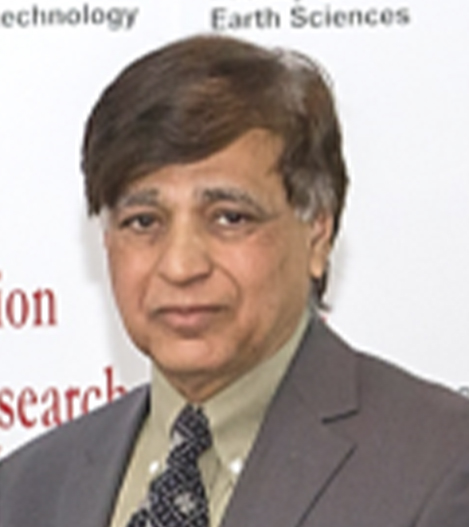
Dr. S. Ejaz Ahmed (PhD 1987) is professor of statistics/data science. He is an internationally known scholar, educator, and an accomplished researcher. His research interests concentrate on big data, predictive modeling, data science, and statistical machine learning with applications in many walks of life. His research has been supported by a variety of grants from the Natural Sciences and Engineering Research Council (NSERC) of Canada since 1987, the Canadian Institute of Health Research, Ontario Centre for Excellence (OCE) and other sources throughout his academic career. He published more than 200 research articles in scientific journals and reviewed more than 100 books and travelled the globe doing 200 scholarly presentation. He supervised/co-supervised about 22 Ph.D. students and numerous M.Sc. students, and currently co-supervising 5 Ph.D. students.