SABITALKS / Structural and Functional Regulation of Centrosome/Cilium Complex In Health and Diseases
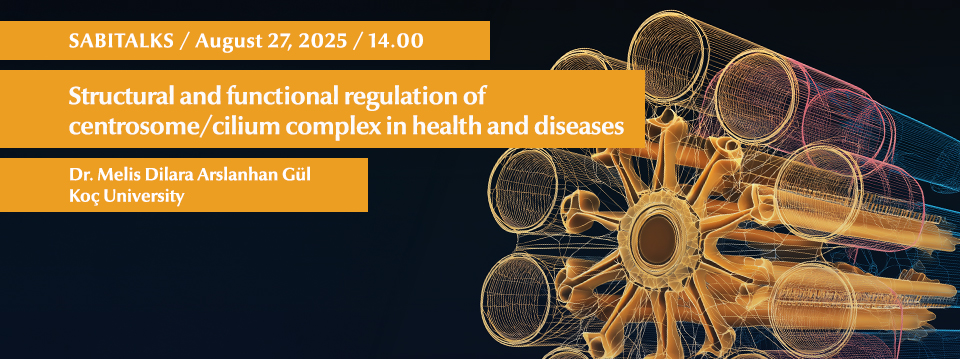
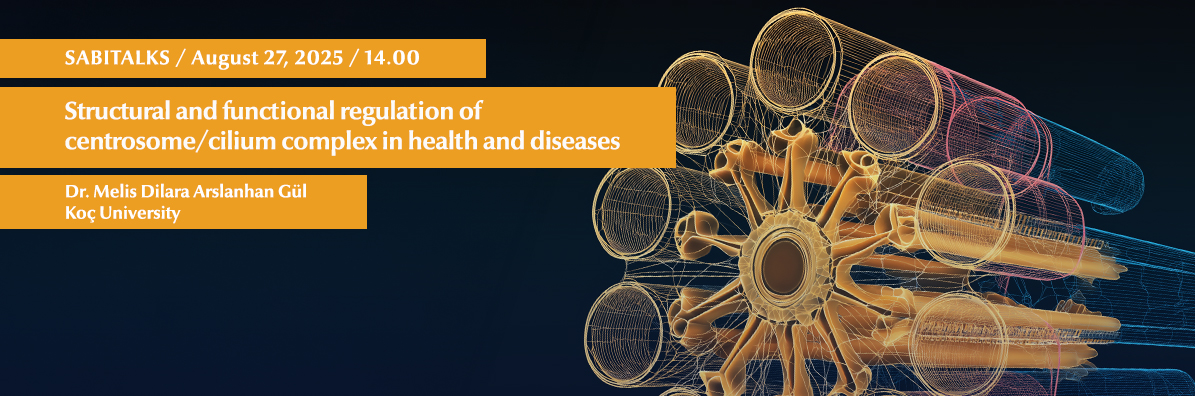
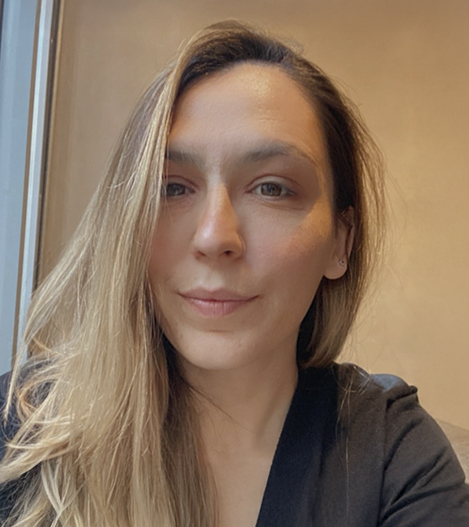
Dr. Melis Dilara Arslanhan Gül from The Koç University is going to be at SABITALKS on August 27, 2025 at 14:00. The event will take place in person.
Location: Istanbul Medipol University North Campus / Building C, C-Z09
https://goo.gl/maps/JDDjygVtFLWiPiMJA
*Participants from outside SABITA must fill in the participation form.
The centrosome/cilium complex forms a highly coordinated structural and functional unit that governs cellular architecture, signaling, and homeostasis. The centrosome, consisting of a pair of centrioles and surrounding pericentriolar material, not only organizes the microtubule cytoskeleton but also froms the basal body to initiate ciliogenesis. The primary cilium acts as a sensory hub, coordinating signaling pathways such as Hedgehog, Wnt, and insulin. Around the centrosome, centriolar satellites function as dynamic protein granules that regulate trafficking and assembly of centrosomal and ciliary components.
Disruption of this regulation underlies diverse diseases. Ciliopathies result in developmental anomalies, obesity, and kidney defects, while centrosome and cilium dysfunction also contribute to cancer and metabolic disorders. Recently, kinases have emerged as critical regulators of centrosome/cilium complex. The dual-specificity tyrosine-phosphorylation-regulated kinase (DYRK) family, best known for roles in cell cycle and development, has recently been implicated in ciliary regulation. We generated the proximity interactome of DYRK3, identifying nearly 200 proteins involved in a range of cellular processes, including primary cilium biogenesis. Functional studies revealed that inhibition or depletion of DYRK3 leads to ciliary elongation, instability of the distal segment, abnormal fluctuations in length, and increased ectocytosis. Furthermore, we showed that DYRK3 cooperates with DYRK2 to maintain proper cilium length and morphology, acting through centriolar satellites and IFT components. These findings highlight the centrosome–cilium complex as a dynamic regulatory hub essential for health, and a contributor to diseases ranging from ciliopathies to cancer and metabolic disorders.
I earned my Bachelor’s degree in Molecular Biology and Genetics from İzmir Institute of Technology before moving to France to complete a Master’s in Oncology at the École Normale Supérieure de Cachan. During my Master’s degree, I focused on investigating the JAK/STAT signaling pathway and exploring combination therapies for the treatment of myeloproliferative neoplasms and mastocytosis. I then returned to Turkey to pursue my PhD at Koç University in the Cytoskeleton Research Laboratory, where I focused on uncovering the mechanisms of centrosome and cilium biogenesis using proximity labeling techniques. After working as lecturer in Koç University for a year, I rejoined the same lab in 2023 as a postdoctoral researcher. I investigate how the centrosome and cilium complex biogenesis is regulated in health and diseases.