

SABITALKS / Redox Signaling in Mitochondrial Myopathies

*The event is postponed and will take place on January 24, 2024.
Dr. Şükrü Anıl Doğan from Boğaziçi University is going to be at SABITALKS on January 24, 2024 at 14:00. The event will take place in person. You can attend the event in person in TTO (Technology Transfer Office) seminar room.
Location: Istanbul Medipol University Kavacık North Campus: https://goo.gl/maps/JDDjygVtFLWiPiMJA
*Participants from outside SABITA must fill in the participation form.
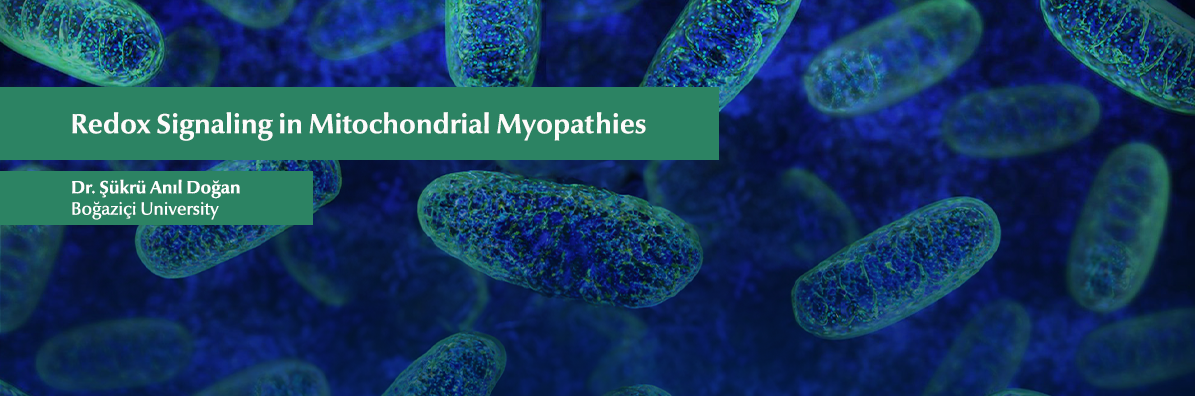
Mitochondria constitute the major energy plant of the cell; genetic defects of mitochondrial bioenergetics cause an astonishingly wide spectrum of disorders. As the site of oxidative phosphorylation, mitochondria are the chief consumers of intracellular oxygen and thus are the main source of reactive oxygen species (ROS). The traditional view of ROS production being unregulated and their targets being random was challenged by recent evidence; ROS are now being appreciated to have beneficial effects like signaling, the in vivo importance of which has not been adequately investigated.
The adaptability of skeletal muscle mitochondria to various stressors and stimuli is well-known as these organelles are highly dynamic. However, when faced with severe and sustained mitochondrial dysfunction, these mechanisms are insufficient, leading to mitochondrial myopathies that cause significant muscular dysfunction. I will be introducing and discussing the importance of ROS signaling in two different myopathy mouse models: (i) Mitochondrial respiratory deficiency model, COX15mko, and a novel (ii) Mitochondrial translation deficiency model, DARS2mko. Currently, ROS-lowering interventions are widely proposed as an anti-aging strategy in humans and used widely as therapy in some diseases. However, reducing the ‘good/signaling ROS’ might be detrimental in some cases.
Cells have developed processes for monitoring the integrity of their mitochondrial network to finetune their current conditions to overcome environmental insults and respond to physiological cues. If mitochondrial function declines, mitochondrial stress responses (MSRs) are activated to promote the repair and recovery of this network and maintain cellular function. Additionally, I will focus on how the induction of major MSRs correlate with mitochondrial myopathy and disease progression, examining the potential existence of tissue-specific responses.
Boğaziçi University
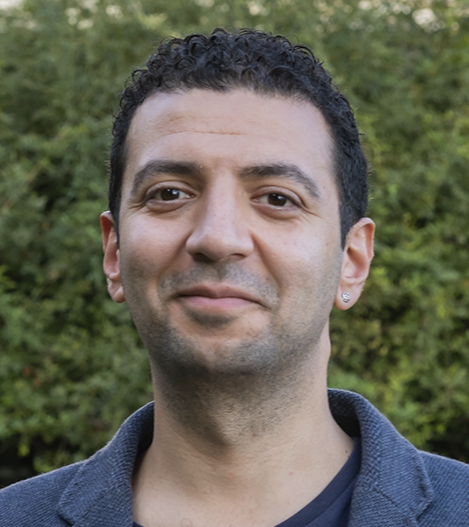
Dr. Şükrü Anıl Doğan received his Bachelor’s and Master’s degrees from Middle East Technical University, Department of Molecular Biology and Genetics. With a passion for unraveling the intricacies of mitochondrial biology and its implications in aging and age-related diseases, Dr. Doğan moved to Cologne, Germany, where he pursued his Ph.D. at CECAD. Afterwards, Dr. Doğan worked as an Investigator Scientist at MRC Mitochondrial Biology Unit, University of Cambridge on reactive oxygen species signaling in mitochondrial diseases. He returned to Turkey to establish his own research laboratory at Boğaziçi University, exploring the critical role of mitochondria in health and disease. Since then, Dr. Doğan has received numerous awards and grants, including EMBO Installation Grant, The Science Academy, Turkey’s Young Scientist Award, YÖK Research Universities Support Program Grant, and Boğaziçi University’s Excellence in Teaching Award.