

Brain Blooming / Next Generation Sequencing Technology and Its ApplicationsBrain Blooming / Next Generation Sequencing Technology and Its ApplicationsBrain Blooming / Next Generation Sequencing Technology and Its ApplicationsBrain Blooming / Next Generation Sequencing Technology and Its Applications
  • RESEARCH CENTERS
  • CORE FACILITIES
    • Advanced Microscopy
    • Cell Culture
    • Molecular Cell Biology
    • Proteomics
    • Drug Discovery
    • Bioinformatics
    • Biomaterials
    • Electrophysiology and Behavior
    • Cognitive Neuroscience
    • Animal House
  • PEOPLE
    • Administration
    • Group Leader
    • Transition Scientist
    • Early Career Researchers
    • Students
  • EVENTS
    • Event Calendar
    • Critical Mind
    • SABITALKS
    • InFocus
    • CROSSTALKS
    • MODAS WS
    • SABITA Podcast
    • Social
  • ABOUT US
    • Our Mission
    • Gender Equality Policy
  • RESEARCH CENTERS
  • CORE FACILITIES
    • Advanced Microscopy
    • Cell Culture
    • Molecular Cell Biology
    • Proteomics
    • Drug Discovery
    • Bioinformatics
    • Biomaterials
    • Electrophysiology and Behavior
    • Cognitive Neuroscience
    • Animal House
  • PEOPLE
    • Administration
    • Group Leader
    • Transition Scientist
    • Early Career Researchers
    • Students
  • EVENTS
    • Event Calendar
    • Critical Mind
    • SABITALKS
    • InFocus
    • CROSSTALKS
    • MODAS WS
    • SABITA Podcast
    • Social
  • ABOUT US
    • Our Mission
    • Gender Equality Policy

Brain Blooming / Next Generation Sequencing Technology and Its Applications
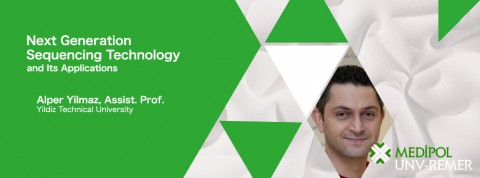
 

Next generation sequencing (NGS) technology revolutionized the genomic analysis and systems biology research by producing vast amount data, millions of short reads per sequencing. The massiveness of data attracted researchers from various backgrounds in order to be tackled with. Many softwares utilizing new algorithms emerged in a very short period of time and allowed molecular biologists to perform analysis that was nearly impossible to perform just several years ago. Not only the softwares but also the sequencing technology is advancing at a rapid pace. This talk is aiming to introduce the different sequencing technologies, currently available and emerging. Also the talk will briefly mention various fields that advanced by the help of NGS.

Dr. Yilmaz got his bachelor degree from Bilkent University Department of Molecular Biology and Genetics in 2000. He pursued his Ph.D degree at the Ohio State University and got his Ph.D in 2007. His thesis involved determination of translational control of HIV mRNAs within infected cells. After completing his Ph.D., Dr. Yilmaz pursued a post-doctoral research where he combined his strong molecular biology training with computational biology. During his post-doctoral studies he was involved in analysis of next generation sequencing data and also revealing genome grammar of certain plant genomes. After completing his post-doctoral studies, he got faculty position as assistant professor at Yildiz Technical University in 2012, where he’s carrying on his research since then.

Share

SOCIAL MEDIA

SHORTCUT LINKS


  • Contact
  • Corporate Identity
  • Referrence Guide
  • Request Forms
  • Sabita 360°
  • Sabita Society
  • Social

OUR MISSION

Translation of Scientific Findings From Bench to Bedside

  • Read More
  • © 2025 Medipol University | SABITA Research Institute for Health Sciences and Technologies
    [contact-form-7 id="50" title="Contact form 1"]