REMER Talks / A Therapeutic Monoclonal Antibody – for Treat Type 2 Diabetes
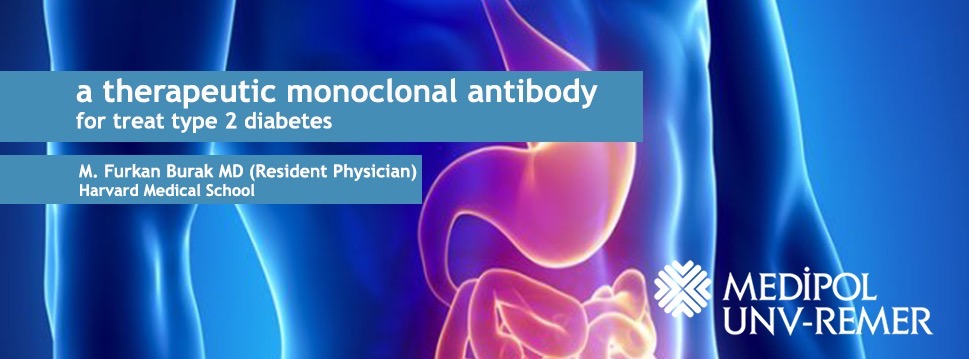
13 May 2016, at REMER Talks, Dr. M. Furkan Burak from Harvard Medical School is going to be at REMER.
What about is topic of seminar?
The lipid chaperone aP2/FABP4 has been implicated in the pathology of many immunometabolic diseases, including diabetes in humans, but aP2 has not yet been targeted for therapeutic applications. aP2 is not only an intracellular protein but also an active adipokine that contributes to hyperglycemia by promoting hepatic gluconeogenesis and interfering with peripheral insulin action. Serum aP2 levels are markedly elevated in mouse and human obesity and strongly correlate with metabolic complications. These observations raise the possibility of a new strategy to treat metabolic disease by targeting serum aP2 with a monoclonal antibody (mAb) to aP2. We evaluated mAbs to aP2 and identified one, CA33, that lowered fasting blood glucose, improved systemic glucose metabolism, increased systemic insulin sensitivity, and reduced fat mass and liver steatosis in obese mouse models. We examined the structure of the aP2-CA33 complex and resolved the target epitope by crystallographic studies in comparison to another mAb that lacked efficacy in vivo. In hyperinsulinemic-euglycemi
Who is Dr. M. Furkan Burak?
Dr. M.Furkan Burak graduated from Kocaeli University School of Medicine and is a clinical fellow in Mount Auburn Hospital / Harvard Medical School, Medicine Department and scientist in Harvard School of Public Health (HSPH), Department of Genetics and Complex Diseases. His research mainly focused on the role of fatty acid binding proteins in obesity and development of new therapeutic approaches in diabetes treatment. He has been served in HSPH Postdoctoral Association (PDA) as a Vice President since 2011. Recently he has become Ambassador to TUSEB USA (The Turkish Institutes for Health Sciences). He contributed to metabolism field with high impact publications and has U.S patent applications in diabetes field. He recently received EASD young scientist award for his drug discovery project against diabetes. He is the founder of HSPH PDA International Visiting Scientist and Harvard –
Turkey student exchange programs. He is also one of the founder and Co-chair of Boston Turkish
Biologists’ Colloquium since 2011.