

SABITALKS / Mapping Conditional Dependencies with Functional Genomics
Dr. Selahattin Can Özcan from Koç University is going to be at SABITALKS on Tuesday, October 6, 2026 at 2:00 PM, and will give a presentation titled “Mapping Conditional Dependencies with Functional Genomics”
*Participants are required to complete the registration form.
Location: Istanbul Medipol University, North Campus / Technology Transfer Office Training Meeting Room.
In this talk, functional genomics approaches using pooled CRISPR screens to determine the functions and dependencies of individual genes will be discussed, with a particular focus on conditional dependencies that emerge at specific cellular stages or states.
Two pooled CRISPR screens from distinct biological contexts will be presented. First, a metabolism-focused screen in a PLK4-driven model of centrosome amplification in pancreatic ductal adenocarcinoma cells will be discussed. The screen identified coordinated dependencies across three interconnected axes: redox homeostasis, nucleotide sugar metabolism, and the unfolded protein response. Hits in the hexosamine and uronic acid pathways converged on hyaluronic acid metabolism, while the HA-CD44 axis was found to be required for centrosome clustering and mitotic fidelity. Disruption of this axis increased lethal multipolar divisions. Both hyperactivation and suppression of ER stress proved detrimental, highlighting the importance of a finely tuned proteostatic equilibrium for cellular adaptation.
Second, an epigenetics-focused screen in human erythroid differentiation will be presented. EP300 was identified as an early differentiation dependency, while SMARCB1 emerged as a late enucleation dependency. SMARCB1 loss did not alter global chromatin accessibility or GATA1 protein levels, but instead redistributed GATA1 occupancy across erythroid regulatory loci. This redistribution was mapped using Docking and Deamination sequencing (D&D-Seq), a deaminase-based footprinting method that enables high-resolution analysis of transcription factor occupancy. GATA1 binding was decreased at the SNCA promoter in SMARCB1 knockout cells. Given that SNCA is strongly induced during normal late-stage erythroid differentiation, these findings indicate that SMARCB1 is required for GATA1-mediated activation of terminal maturation programs.
Together, the two screens point to the same type of conditional dependency: a balanced unfolded protein response in centrosome-amplified cells and a specific pattern of GATA1 occupancy in maturing erythroblasts. These dependencies would not be detected outside the cellular stage or state in which they arise, highlighting the importance of functional genomics for mapping context-specific genetic dependencies.
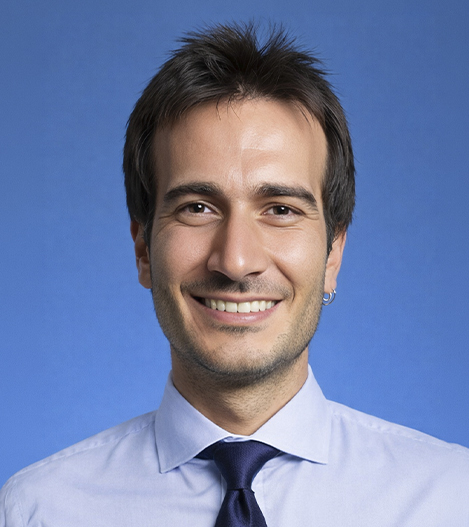
Dr. Selahattin Can Özcan is a cancer biologist interested in the conditional dependencies that different cellular phenotypes create. He initially trained as a veterinarian before completing a PhD in biochemistry focused on cancer metabolism and subsequently moving into centrosome biology and the mitotic defects caused by extra centrosomes. Along the way, he developed expertise in pooled CRISPR screens and proximity proteomics, applying these approaches to pancreatic cancer and the epigenetic control of blood cell differentiation. His work has shown that a gene can be required in one cellular context while being dispensable in another. He now studies which cellular conditions create specific dependencies and whether these dependencies can be exploited as therapeutic vulnerabilities.