

SABITALKS / Activity-Based Molecular Probes for Visualization and Treatment of Cancer Cells with an Improved Selectivity
Dr. Toghrul Almammadov from Koç University is going to be at SABITALKS on July 24, 2024 at 16:00. The event will take place in person. You can attend the event in person in Lecture Hall C-412.
Location: Istanbul Medipol University Kavacık North Campus: https://goo.gl/maps/JDDjygVtFLWiPiMJA
*Participants from outside SABITA must fill in the participation form.
Various techniques have been utilized for detecting the tumor tissues, and only in the recent decades, fluorescence imaging appeared as one of the most prominent and non-invasive imaging tools, due to its lower limit of detection, higher signal to noise signal ratio, and cost efficiency. Furthermore, it is very crucial to differentiate cancer cells from normal cells. In this regard activity-based probes (aP) appeared as potential candidates, which is based on conjugation of the stimuli-responsive unit to the parent fluorophore. Since cancer cells express specific biomarkers in elevated levels, aPs can detect these biomarkers with OFF-ON switch mode. Activation signal with a single analyte may pose “false signals” since healthy cells also possess a certain concentration of biomarkers. In this regard, unimolecular double-locked probes entered the field, for better distinguishing cancer cells. In this direction, few aPs are demonstrated for detecting cancer cells, ranging from neuroblastoma to melanoma. Furthemore, another challenge in the clinics is the treatment of cancer cells, since conventional therapeutic methods have many disadvantages. To address this, light-based, and non-invasive effective treatment method – photodynamic therapy (PDT) is introduced to the clinics area. As, in the case of aPs, PDT agents can also be easily converted to activatable PDT agents (aPDTs) to further improve the selectivity of the treatment. In our recent studies, small organic molecules have been synthesized in the framework of aPDTs in the effective ablation of cancer cells.
Another light emitting molecules are chemiluminescent (CL) probes: the molecular sensors, which do not require the external light source for activation, eliminating the major drawbacks of fluorescence imaging, such as autofluorescence, photobleaching, and photodegradation, and limited penetration depth. The first ever organelle-targeted and activatable CL probes are presented in next studies with in-vivo applications.
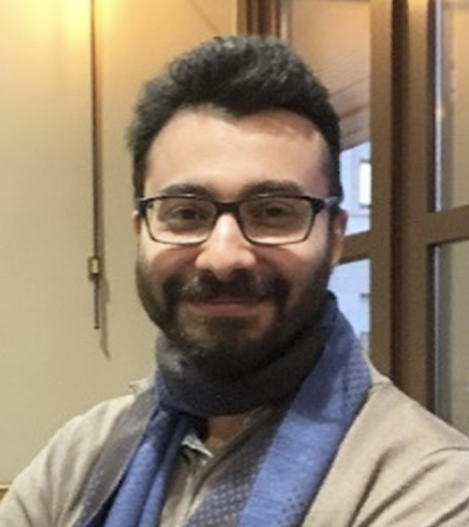
Dr. Toghrul Almammadov received his BSc, and PhD in Chemistry respectively from Middle East Technical University, and Koc University, specializing in Organic Chemistry and Chemical Biology. He then moved to the University of Zurich, for a postdoctoral period for exploring reactivity and magnetic properties of nanographenes. Currently he is working on nanoparticle assembled photosensitizers for targeted cancer therapy, and small organic molecule synthesis for cancer diagnostics. Dr. Almammadov’s research interests include rational design of molecular sensors for improved cancer selectivity, organelle targeting strategies in visualization and treatment of cancer cells, expression of cancer biomarkers and their inhibition mechanisms, enzyme. In 2023, Dr. Toghrul Almammadov and co-workers could implement red-shifted fluorophore for highly selective detection of melanoma cells. Moreover, Dr. Toghrul Almammadov also collaborates with other groups for other interfaces of biological sciences.